『化学㉙』切削加工の歴史・特徴・種類 河東 丈二

世界最初の旋盤はイギリスのモーズリーが、それまで手持ちで刃物を、回転する工作物に押し当てて加工していたものを、1780年頃に刃物台を機械送りにして、親ネジの交換もできるようにした機械旋盤を作ったのが最初と言われています。(ロンドン科学博物館)
加工と言えば、金属・青銅・木材から今や樹脂の切削加工などが代表される。
人類にとって最初の加工は有史以来から木材加工であり、石時代には既に斧などが使われ
その後、金属・青銅から鉄製の斧や鋸が使われるようになりました。
金属加工の発端は、数千年前に人類が原料となる金を発見したことや、鉱物や岩石などの鉱石から不純物を取り出して金の純度を高める精錬技術の発見によるとされています。
これらの金属素材を加工する技術によって、人類が道具を使うという生活の進歩から文明の発展につながりました。
古代エジプトの墓の中から発掘された多くの装身具には、金属をハンマーで叩いて加工する「鍛造(たんぞう)」が施され、やがて金属を溶かして金型に流し固める「成形加工」へ発展したことがわかります。
このように古代エジプトでは、天然の金や銀、銅などの素材を使用し、武器や装飾品、礼拝物などを製造、その後、斧(おの)や鍬(くわ)など農耕具の大量生産へとつながりました。
その後、青銅が誕生したのは、紀元前3,000年頃と言われています。
初期のメソポタミア文明であるシュメール文明によって発明されました。
舞台となったイラン高原では、銅やすず、燃料の木材が豊富にありました。
また、多くの銅鉱石はすずを同時に含むために、自然と青銅を得ることができたのです。
産地によりすずの配合比が決まっており、すずと同時に添加されることのある鉛の同位体の比率が産出鉱山ごとに異なるのが特徴です。
日本においては、紀元前4世紀ころに鉄とともに九州へ伝わっています。
やがて、日本の金属加工は、金属を溶かして型に流し込み成形する鋳造技術へと発展。
明治以降の急速な工業化に伴い、大型の自由鍛造技術による駆動部品や金型を使用した自動車部品や精密部品など、生産方法も大量生産による効率化が進むようになりました。
そして、現代の金属加工業界は、加工の機械化と化学技術の発展とともに、新たな時代に入りました。
その一つが、NC装置を備えた工作機械です。
NC工作機械は、金属や樹脂の不要な部分を取り除き(除去加工)、目的のカタチに仕上げる金属・樹脂加工機械です。
自動車や航空機の部品をはじめ、金型や電子機器・スマホなど、さまざまな精密部品がNC工作機械から生まれています。
「機械をつくるための機械」として、マザーマシン(母なる機械)ともよばれ、NC工作機械自身の部品も工作機械を使いつくられています。
切削加工とは、明確な定義付けはされていませんが、一般的に切削工具を用いて金属・樹脂などの加工物を削ったり、切断したりする加工技術のことを指します。
旋盤加工やフライス加工などが切削加工に含まれており、機械加工の中では代表的なものであると言えるでしょう。
切削加工の特徴
切削加工は先述した通り、機械加工の中では代表的なもので、除去加工の一種として位置づけられます。
比較的精度の高い加工が可能といった特徴を持つのが切削加工です。
また、同じ除去加工の一種である研削加工よりも削る力に長けているため、加工物の全形をつくることが可能といった特徴も持ちます。
研削加工の方がより精度の高い加工を得意とするため、全形を切削加工で作り、より細かい精度を求められる箇所は研削加工を用いるといったように、それぞれ使い分けられています。
切削加工の種類
旋盤加工
旋盤加工は加工物を固定する旋盤と加工物を削るバイトと呼ばれる切削工具で構成されており、加工物を回転させ、バイトを加工箇所にあてて削っていきます。 丸物加工とも呼ばれることがあり、主に丸形状に加工していくことを得意とした加工方法です。
フライス加工
フライス加工は旋盤加工とは逆に切削工具側を高速回転させて、加工物に押し当てて削っていく加工方法で、角物の加工を得意とします。 切削加工では、加工物を削ったときに内角部分に丸みが残ってしまうといった特徴を持ちます。 角部分の丸みを「隅アール」と呼びますが、この隅アールを無くして、ピン角と呼ばれる丸みのないとがった角部を作ることはできません。 フライス加工で残ってしまった隅アールは、除去加工の一種である型彫り放電加工を用いることで解消することができます。
穴あけ加工
穴あけ加工はボール盤と呼ぶ機会を用いて加工物に穴をあけたり、加工物の穴を掘り広げたりすることができます。 先述した旋盤加工やフライス加工などでも穴あけ加工は可能ですが、ボール盤の方がより穴あけ加工には適しています。 ボール盤を用いた加工では、穴あけ加工以外にもねじ切り加工や、加工した箇所を滑らかにするリーマ加工なども可能です。
切削加工の加工機や工具の種類
マシニングセンタ
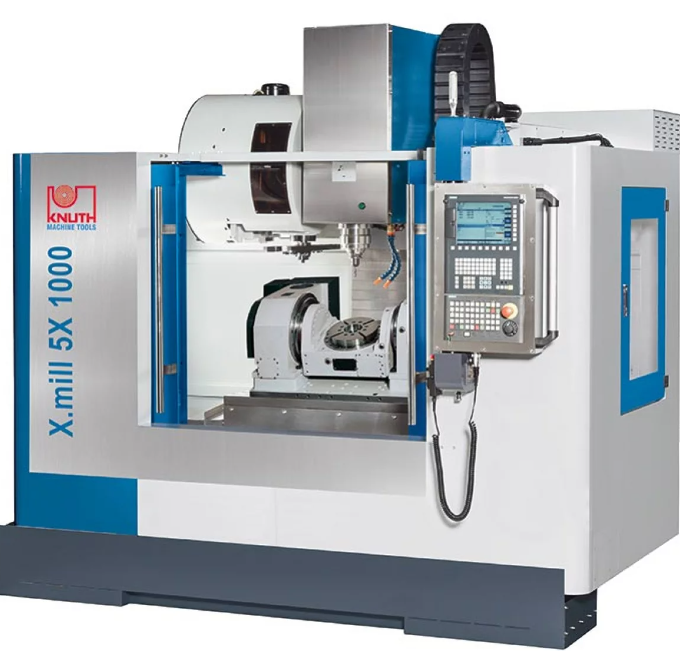
マシニングセンタとは、自動工具交換機能を備えたNC工作機械のひとつで、フライスや穴あけ、中ぐり、ねじ切などといった複数の加工方法を1台で対応することができます。 複数の加工に対応するために、マシニングセンタは工具マガジンに複数の工具をセットしており、対象の加工に合わせて自動的に工具がセットされます。 このようにマシニングセンタを用いることで、工具のセットから加工までを自動的に行うことが可能です。
5軸加工機

3軸加工機と5軸加工機の外観比較
マシニングセンタは通常、X・Y・Zの3軸加工ですが、5軸加工機はその名の通り、回転と傾斜の2軸を加えた5軸での加工を可能にします。 このような特徴から5軸マシニングセンタとも呼ばれます。
バイト

旋盤加工では、加工物を固定してバイトという工具を使用して加工を行います。 この時に使用するバイトとは、加工物を削る役割を担っており、いくつもの種類が存在しています。 いくつもある種類の中から、加工方法に合ったバイトを選定することで、外丸削りや面削り、ねじ切りなどの適切な加工が可能になります。
切削加工には、大きく2つに分けて、加工する工作物を固定して工具を回転させる「転削」と、工作物を回転させる「旋削」とがあります。 転削の代表として「フライス加工」、旋削の代表として「旋盤加工」である。
また、旋盤加工には外径加工、内径加工、ねじ切り加工、突切り加工の4つの基本的な加工方法があります。

History, features, and types of cutting Joji Kawahigashi
The world's first lathe was made by Moseley of England, who used to press the cutting tool by hand against the rotating workpiece. It is said that it was the first time to make a mechanical lathe that (London Science Museum)
When it comes to processing, cutting processing of metal, bronze, wood, and now resin is represented.
The first processing for mankind has been wood processing since recorded history, and axes were already used in the Stone Age.
After that, iron axes and saws came to be used instead of metal and bronze.
The beginning of metal processing is said to be due to the discovery of gold as a raw material by humans thousands of years ago, and the discovery of refining technology that removes impurities from ores such as minerals and rocks to increase the purity of gold.
The technology for processing these metal materials has led to the development of civilization from the progress of human life through the use of tools.
There are various theories about the beginning of metalworking, but traces of metalworking have already been left in the ancient Egyptian civilization more than 6000 years ago.
Many of the accessories excavated from ancient Egyptian tombs were subjected to "forging", which is the process of beating metal with a hammer, and then to "molding", which melts the metal and pours it into a mold to harden it. you can see it has evolved.
In this way, in ancient Egypt, natural materials such as gold, silver, and copper were used to manufacture weapons, ornaments, and objects of worship, and then mass production of agricultural implements such as axes and hoes. connected to
After that, bronze was born around 3,000 BC.
It was invented by the Sumerian civilization, an early Mesopotamian civilization.
The Iranian plateau, where the film was set, was rich in copper, tin, and wood for fuel.
Also, many copper ores contain tin at the same time, so it was possible to naturally obtain bronze.
The mixing ratio of tin is determined by the production area, and the ratio of isotopes of lead, which is sometimes added at the same time as tin, differs from mine to mine.
In Japan, it was introduced to Kyushu along with iron around the 4th century BC.
Eventually, Japanese metal processing developed into a casting technology that melts metal and pours it into a mold.
With the rapid industrialization after the Meiji era, the production method has become more efficient through mass production, such as drive parts using large free forging technology, automobile parts, and precision parts using molds.
The modern metalworking industry has entered a new era with the development of the mechanization of processing and chemical technology.
One of them is machine tools equipped with NC devices.
NC machine tools are metal and resin processing machines that remove unnecessary parts of metal and resin (removal processing) and finish them into the desired shape.
NC machine tools are used to produce various precision parts, including parts for automobiles and aircraft, molds, electronic devices, and smartphones.
As a "machine for making machines", it is also called a mother machine (mother machine), and the parts of NC machine tools themselves are also made using machine tools.
Cutting is not clearly defined, but generally refers to a processing technology that uses a cutting tool to shave or cut a workpiece such as metal or resin.
Machining includes lathe processing and milling processing and can be said to be representative of machining processing.
Features of cutting
As mentioned earlier, cutting is a typical machining process and is positioned as a type of removal machining.
Machining is characterized by the ability to perform relatively high-precision machining.
In addition, since it is superior to grinding, which is a type of removal processing, it has the feature of being able to create the entire shape of the workpiece.
Grinding is better at processing with higher precision, so the entire shape is made by cutting, and parts that require finer precision are ground.
Type of cutting
lathe manufacturing
Lathe processing consists of a lathe that holds the workpiece in place and a cutting tool called a bit that cuts the work piece.
It is also called round object processing, and it is a processing method that is mainly good at processing round shapes.
milling
Milling is a processing method that rotates the cutting tool side at high speed and presses it against the workpiece to cut it, which is the opposite of lathe processing, and is good at machining square objects.
A feature of machining is that the internal corners remain rounded when the workpiece is cut.
The roundness of the corners is called "corner radius", but it is impossible to eliminate this corner radius and create sharp corners without roundness called pin corners.
The corner radius left by milling can be eliminated by using die-sinking electric discharge machining, which is a type of removal machining.
drilling
Drilling can be performed by drilling holes in a workpiece or drilling holes in the workpiece using an opportunity called a drill press.
Drilling can be done with lathes and milling as mentioned earlier, but drill presses are more suitable for drilling.
In machining using a drilling machine, in addition to drilling, it is also possible to perform thread cutting and reaming to smooth the machined parts.
Types of cutting machines and tools
machining center
A machining center is one of the NC machine tools equipped with an automatic tool change function.
In order to handle multiple processes, the machining center has multiple tools set in the tool magazine, and the tools are automatically set according to the target process.
By using a machining center in this way, it is possible to automatically perform everything from tool set to machining.
5-axis machine
Appearance comparison of 3-axis and 5-axis machines
Machining centers usually perform 3-axis machining of X, Y, and Z, but as the name suggests, 5-axis machines enable 5-axis machining by adding two axes of rotation and tilt.
Because of these characteristics, it is also called a 5-axis machining center.
Part-Time Job
In lathe machining, the workpiece is fixed and machined using a tool called a bit.
The bit used at this time plays the role of cutting the workpiece, and there are many types.
Selecting the tool that matches the machining method from among many types makes appropriate machining such as outer rounding, facing, and threading possible.
Cutting work can be broadly divided into two types: "rolling", in which the workpiece is fixed and the tool is rotated, and "turning," in which the workpiece is rotated. "Milling" is representative of milling, and "Lathe" is representative of turning.
In addition, there are four basic machining methods in lathe machining: external machining, internal machining, threading, and parting off.


コメント